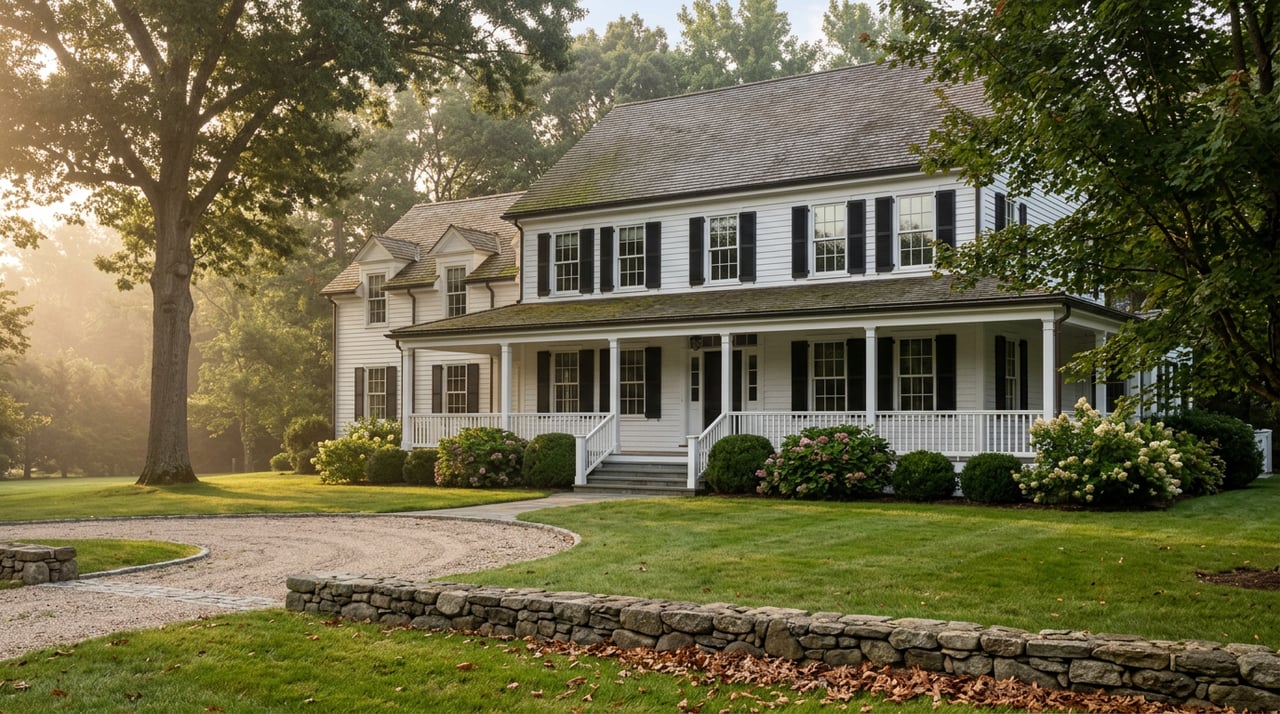
Someone comparing Concord to West Concord this summer will find a startling gap. Concord's townwide median sale price sits near $1.4 million, according to sold-data from the last several months. Search "West Concord home prices" instead and the median drops to $845,000 for the three months ending in April 2026, down 33 percent from the same period a year earlier. On paper, that reads like a $500,000 discount for buying a few minutes down the same commuter rail line. It isn't. The two numbers aren't describing the same market wearing a cheaper coat. They're describing two different kinds of housing stock, counted in two very different sample sizes, and mistaking one for a bargain version of the other is how buyers end up shocked at their own offer strategy three weeks into a search.
Same Line, Four Minutes Apart, Different Market
Concord is served by two stops on the MBTA Fitchburg Line: Concord station, in the historic village center near Monument Square and the Colonial Inn, and West Concord station, the very next stop toward Boston, sitting at Commonwealth Avenue and Main Street in the West Concord commercial corridor. Concord station is priced in Zone 5 on the MBTA's fare map, and the two stops sit close enough together on the same line that a rider's commute time barely changes depending on which one they use. If commute cost and speed were what set home prices in this town, the two villages should price close to each other. They don't, which is the first clue that rail access isn't the variable doing the work here.
The town has also been investing in that shared corridor. Concord is part of the broader Fitchburg Line improvement project, a corridor-wide effort described by the town as bringing modernized stations, expanded parking, and better connections along the full 50-mile route from Fitchburg to Boston. That kind of infrastructure spending tends to lift an entire line's desirability evenly. It doesn't explain why one village's median price fell by a third year over year while the other held roughly flat.
What's Actually Driving The Gap
The explanation sits in what each number is counting, not where each station sits. Concord's townwide figure is pulled upward by a segment of large-lot, 18th and 19th century Colonials, Federals, and Queen Annes concentrated near the historic core, the kind of properties that dominate the high end of Concord Center's inventory. West Concord's sold data, by contrast, includes a heavier mix of smaller-footprint housing: townhomes and condominiums in complexes like Concord Greene, Craftsman-era cottages near the village center, and starter colonials on tighter lots close to the Bruce Freeman Rail Trail. A median is only as stable as the mix of homes that sold in the window being measured, and West Concord's window was thin. Twenty-five homes sold there in the three months ending in April 2026, up from just twelve a year earlier. Doubling the sample while shifting its composition toward smaller units is exactly the kind of change that can drag a village median down by a third without a single comparable home actually losing value.
Price per square foot tells a steadier story than the headline median does. Concord's townwide figure runs around $553 per square foot as of the most recent data, while West Concord's runs closer to $486. That's a real gap, roughly 12 percent, and it likely reflects genuine differences in lot size, age of construction, and proximity to the historic district. It is nowhere near the roughly 40 percent gap the raw median suggests. A buyer using the townwide-versus-village median to judge whether West Concord is "the affordable side of Concord" is reading a composition effect and calling it a location discount.
What This Means At The Table
The two villages also behave differently once a buyer is actually competing for a house, and the pattern shows up in how far above or below asking price homes actually close. Recent sold data for Concord townwide shows most homes closing at or slightly below list price, with only the most sought-after properties pushing a couple of points over asking. West Concord's competitive homes tell a sharper story: the top tier there has been closing around 7 percent over list price, moving to pending in under two weeks, well ahead of the townwide pace. That's a village where a smaller, walkable product line, condos and townhomes near Concord Greene and starter colonials close to the village center, draws faster, more aggressive bidding than the broader Concord market once a listing is well priced. A buyer who assumes Concord Center's estate-level inventory sets the competitive tone for the whole town will underestimate exactly how fast a well-priced West Concord listing can move.
Here's how the two villages actually compare on the numbers that matter, side by side:
| Metric | Concord (townwide) | West Concord (village) |
|---|---|---|
| Median sale price | About $1.4 million | $845,000 (3-month trailing, ending April 2026) |
| Median price per square foot | About $553 | About $486 |
| Days on market | Roughly 37 to 41 days | About 24 days |
| Homes sold (recent 3-month window) | Dozens across a broad mix | 25, up from 12 a year earlier |
Notice that West Concord homes are actually moving faster, not slower, than the townwide figure, even as the median price fell. Fast turnover on a smaller, more affordable product line is a very different market signal than a slowdown, and it's easy to miss if you only glance at the price.
The Question To Ask Instead
If you're comparing Concord Center to West Concord, the useful question isn't "which one is cheaper." It's "which product am I actually pricing." A buyer set on a large-lot Colonial with historic character should benchmark against Concord Center's scarce, competitively bid inventory near the historic district, not against West Concord's condo-heavy median. A buyer who wants walkable village life, a shorter commute to shopping and dining, and a lower carrying cost should look at West Concord's actual comparable sales, not assume they're getting a discounted version of Concord Center's estates. The two villages sit four minutes apart on the same train line. They are not, in any meaningful sense for a home search, the same market.
A Few Questions Worth Asking Before You Write An Offer
Do Concord and West Concord have the same commute time to Boston? They're on the same Fitchburg Line, with the two stations only a few minutes apart on the schedule, so commute time is not the variable driving the price difference between the villages.
Is West Concord's lower median price a sign the market is softening there? Not necessarily. Homes sold faster in West Concord than the townwide average during the most recent measured period, and the sales pool nearly doubled year over year, which points to a shift in what's selling rather than a broad slowdown in demand.
Does price per square foot tell a more reliable story than the median? For comparing these two villages, yes. The per-square-foot gap between Concord and West Concord is far narrower than the median gap, which suggests the housing mix, not the location, explains most of the difference.
Comparing two villages inside the same town takes more than a glance at two medians pulled from a portal search. If you're trying to figure out which Concord market actually fits what you're looking for, and what kind of offer it will take to win in each one, Ann Shaw Homes can walk through the current inventory in both villages and help you price your search against the right comparables from the start. Request a personal market consultation and let's sort out which number actually applies to your search.